4 more sailors lost on doomed 1845 Arctic expedition identified
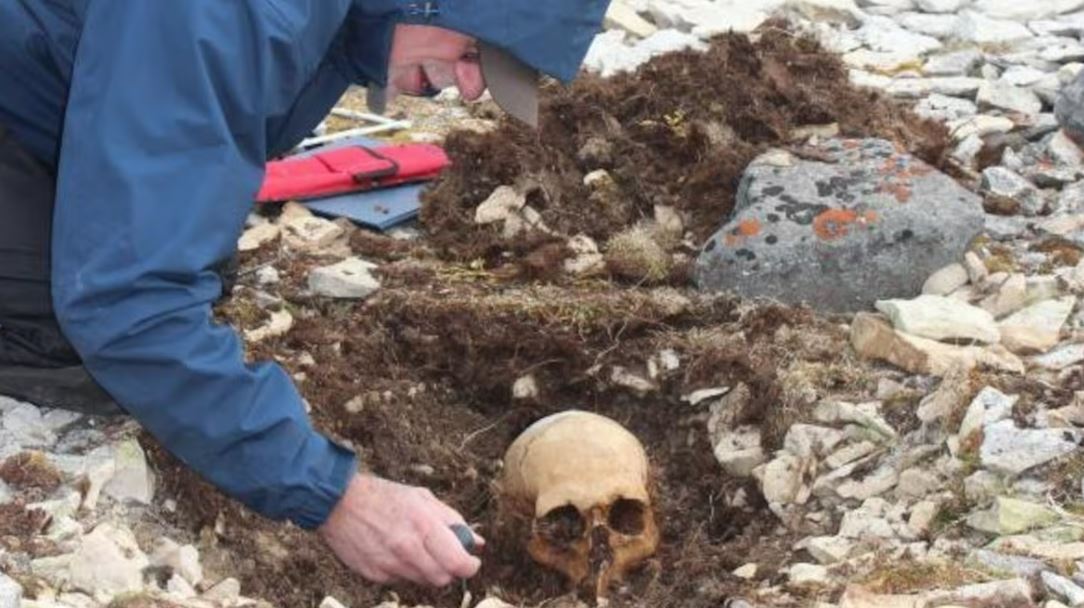
A team of researchers from the University of Waterloo say they have definitively identified the remains of four sailors belonging to the doomed Franklin Expedition — and settled a debate more than a century in the making.
One late night in May of 1859, the British Navy explorer Francis Leopold McClintock stumbled across a bleached skeleton on Gladman Point, roughly 75 kilometers west of today’s Nunavut hamlet of Gjoa Haven.
Nestled among the bones were a collection of papers: some poems, letters, and a seaman’s certificate for Harry Peglar, a petty officer aboard the doomed HMS Terror.
A decade earlier, the Terror had been, together with the HMS Erebus, part of an ill-fated expedition that would go down in history as one of the great tragedies of Arctic exploration.
Locked in sea ice in the Northwest Passage for over two years, both crews eventually abandoned their ships, resorting to cannibalism, in some cases, in an fruitless trek to find human settlement.
In the end, all 129 crew members died.
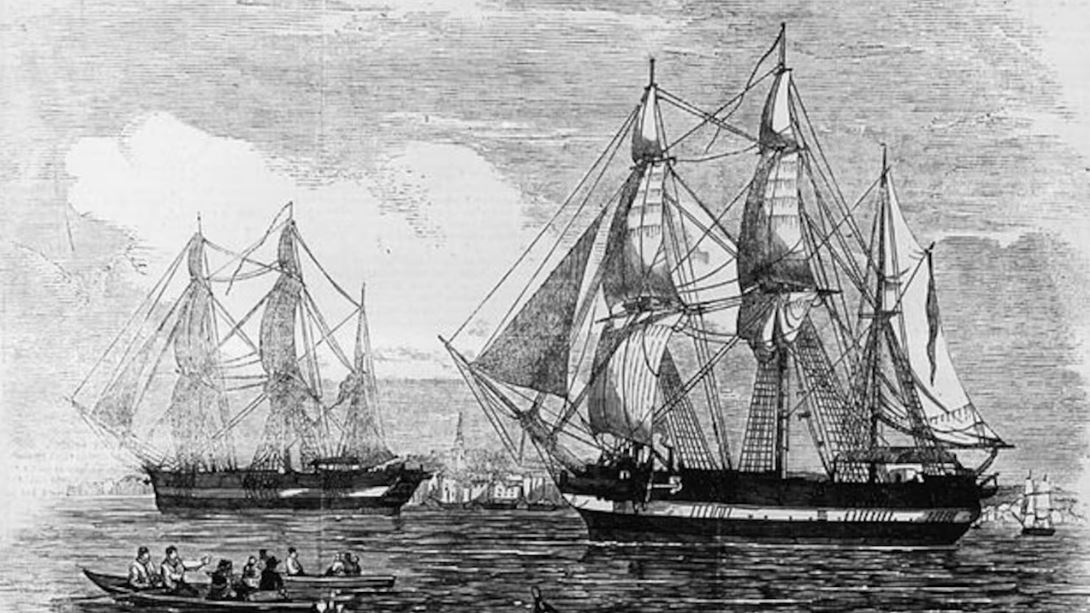
The two ships of the Franklin Expedition disappeared during an 1845 search for the Northwest Passage. (Archives)
“The loss of life on this expedition was unprecedented in British polar exploration,” Douglas Stenton, a University of Waterloo anthropologist helping lead the research on the remains, told CBC.
Despite the documents found alongside the remains McClintock found, the identity of the individual was hotly disputed. They had died wearing the uniform of a lowly steward — something a 19th century captain was unlikely to do.
But in 2013, a team of anthropologists from the University of Waterloo began searching for living descendants of the Franklin expedition crew. This week, they announced a match: Henry Peglar, they confirmed, had died on Gladman Point.
“It was interesting to conclusively identify this sailor because the body was found with almost the only written documents from the expedition ever found,” Robert Park, a researcher on the project, said in a release.
Peglar is also the only sailor aboard the Terror whose remains have been confirmed. But researchers have identified several members of the sister ship Erebus using the same technique.
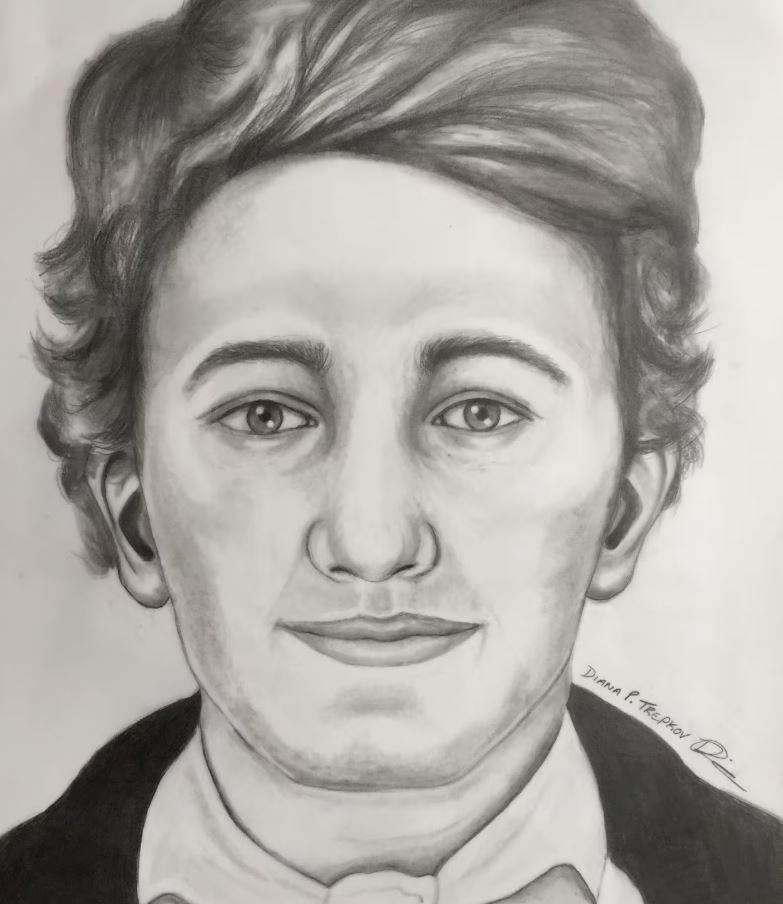
A forensic facial reconstruction by Diana Trepkov of David Young, Boy 1st Class from the HMS Erebus, whose remains were found at Erebus Bay. (2D forensic facial reconstruction by Diana Trepkov, investigative forensic artist)
130 kilometres away from Peglar’s remains were the bodies of three other sailors, since identified as William Orren, David Young, and John Bridgens.
Researchers had previously identified John Gregory, the engineer of the Erebus, and James Fitzjames, the captain, whose body had been cannibalized, likely by the starving crew.
“The genetic research opens a new chapter in the story of the Franklin Expedition, and quite fittingly, it’s being written by the families of the men who didn’t make it home,” Stenton said.
One person identified as an ancestor of the crew turned out to be BBC journalist Rich Preston, who worked on a show uncovering genealogy using modern scientific techniques.
“I was so intrigued when Dr. Stenton first contacted me telling me about his work and asking if I’d be willing to provide a DNA sample,” Preston says in the release. “It was such a huge surprise to hear from the team that my DNA was a match.”
Scientists are able to confirm the likely identity of historic remains by comparing the mitochondrial and Y-chromosome DNA with those of known descendants. If the genetic distance is zero — true in all four of the newly identified remains — it is strong proof they share a common ancestor.
Stenton said the team is continuing to hunt for living descendants to identify more remains from the expedition uncovered over the last century.
“It’s inspiring for younger scientists who are interested in this type of research,” he said. “It connects the past and present, too…. What happened on the expedition can serve as a reminder of how things like ambition, technology, and human limits intersect in ways that are still relevant today.”
Related stories from around the North:
Canada: New Quebec audio guide shows how to correctly pronounce Inuktitut place names in part of Arctic Canada, CBC News
Finland: Finland’s Northern Lights may soon have names, Yle News
United States: Alaska needs a state dinosaur, lawmaker says, but top dino scientist not sure on pick, Alaska Public Media