In Yellowknife, feds announce $3M for volunteer search and rescue across Canada
By
Ottawa says $1 million per year will support about 10,000 volunteers on search and rescue teams across country
In an effort to support search and rescue volunteers on teams throughout Canada, the federal government announced millions of dollars aimed at better supporting the thousands who step up when others are lost, missing, or in distress.
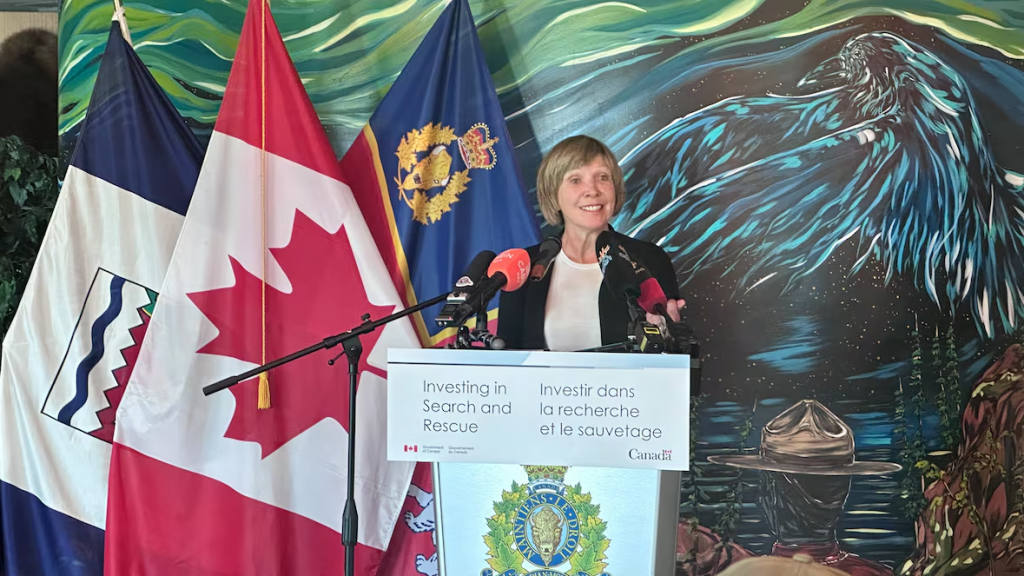
Eleanor Olszewski, minister of emergency management and community resilience made the announcement in Yellowknife on Thursday. She said the federal government had reached a $3 million three-year funding agreement with the Search and Rescue Volunteer Association of Canada (SARVAC).
Under the agreement, $1 million will be provided annually to the hundreds of ground search and rescue teams in Canada, in a press release, the federal government said these organizations represent about 10,000 volunteers.
Thursday’s announcement came after Minister Olszewski and Crown-Indigenous Relations and Northern Affairs Minister Rebecca Alty travelled to Inuvik and Tuktoyaktuk. Olszewski said that visit exemplified why search and rescue programs are so important.
“It really drove home how the vastness of the territory and the nature of the terrain, the importance of local knowledge, the further north you go, how important those things are,” Olszewski said.
“When someone is lost and they’re in danger, every second matters.”
The federal government said the funding will go towards developing and maintaining national ground search and rescue standards and coordinating a national volunteer insurance program.
Bill Peck, the director of SARVAC in the N.W.T., speaking on behalf of the 13 territorial and provincial organizations, said the funding is “extremely important to a national volunteer organization.”
He said the investment would help with “stability, continuity and the ability to plan and deliver essential support over the longer term.”
Peck said in 2024-25, volunteers in the nationwide network were called to more than 2,900 searches, dedicating more than 222,000 volunteer hours on search operations. In the North, Peck said the “value of strong national [search and rescue] coordination is especially clear.”
“Northwest Territories, northern and remote regions face realities that are very different from many parts of the country, vast distances, isolated communities, harsh environments and limited local resources,” Peck said, going on to say volunteers will “always be essential”, and adding funding to support these organizations will improve their ability to respond during a crisis.
Peck said the funding will also go to maintaining their e-learning platform, and support the organization’s AdventureSmart Program, a search and rescue prevention education program, which is also delivered by volunteers.
Related stories from around the North:
Canada: Canadian military surveys Arctic airstrips, infrastructure in Operation NANOOK exercise, Eye on the Arctic
Norway: New video aims to improve passenger safety during Arctic cruise emergencies, Eye on the Arctic