
Chief in Łutsel K’e, N.W.T., says community should consider banishing bootleggers
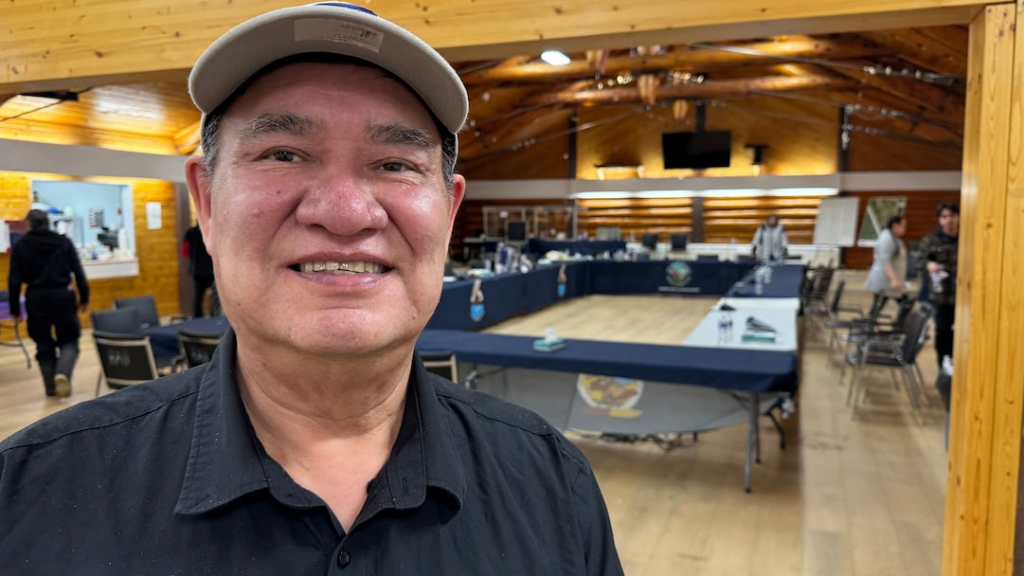
Chief James Marlowe says bootlegging is a big problem in his small community
The chief of Łutsel K’e Dene First Nation in the N.W.T. wants to create a law that would allow the community to banish people, in order to combat what he says is a rise in bootlegging activity.
In a social media post this week, Chief James Marlowe said bootlegging activity in his community is “starting to cause hardships for our people and everyone.”
Łutsel K’e is a small community located on the east arm of Great Slave Lake. There are only a few main points of entry, which means accessing the community involves either a plane, boat, or in the winter, a snowmobile.
In an interview with the CBC News, Marlowe said resources in the community, like the nursing station, have been “overwhelmed,” and the amount of medevacs to Yellowknife has been on the rise.
CBC News contacted the N.W.T. Health and Social Services Authority but did not receive a response before publication.
Marlowe also indicated that the community has been dealing with other things that he believes are related to bootlegging and alcohol abuse, including family breakups, crime, assaults and theft.
In an email to CBC News, RCMP said that its detachment in Łutsel K’e “routinely responds to reports of bootlegging” and seizes illegal alcohol entering the community. Łutsel K’e is officially a dry community, meaning alcohol sales are restricted.
Marlowe said bootleggers often come from outside of the community, but some members “harbour and protect them” because they get a cut from the illegal sales.
“People from outside the community go to our community to destroy the people,” Marlowe said. “I’m afraid that someday, somebody might be killed or somebody might die because of this stuff.”
Marlowe is proposing the community introduce a banishment law, which would aim to remove bootleggers from Łutsel K’e for one or two years.
He said he is already speaking to lawyers to determine how something like this could best be implemented. He also said any such law would need to be approved by First Nation members.
Banishment ‘not usually the be-all and end-all,’ lawyer says
There are several different ways to go about removing someone from a community but it largely depends on whether they are members or not, said Marc Gibson, a lawyer who practices in the N.W.T., Yukon and Ontario, and works with Indigenous communities and governments on advancing their rights.
For someone who is not a First Nation member, a trespass law could be used, Gibson said, which is in the “realm of normal policing.”
But he says banishing a member from their own community is a little more complicated.
Łutsel K’e would have to prove that it is balancing the needs of the community against the individual, who would otherwise have the right to be there, Gibson said.
“There have been cases where banishments have been overturned by the court,” he said.
“Usually those cases are when the Indigenous government doesn’t follow its own rules and doesn’t exercise the authority in the way that its own rules say that it should.”
Gibson pointed to the Indian Act or modern treaties that would govern how banishment laws are implemented.
He also explained that while banishment can be an effective tool, “it’s not usually the be-all and end-all.”
He says other ways to address the issue included reforming housing regulations, empowering police and enforcement officers to do things like searches.
“If you have a complex problem, saying we’re going to banish a few troublemakers isn’t going to solve your problem, but it might make things better,” he said. “It can be part of a broader solution.”
Marlowe says a community meeting will take place on Sept. 29 in Łutsel K’e to discuss a banishment law with First Nation members.
“I think that we have to set an example to enforce peace and happiness in our community,” Marlowe said.
Related stories from around the North:
Canada: Nunavik joins Indigenous push for banishment of traffickers, CBC News
Finland: Police response times up to an hour slower in Arctic Finland, Yle News
United States: Lack of village police leads to hiring cops with criminal records in Alaska: Anchorage Daily News, Alaska Public Media