Yukon photographer captures footage of caribou carrying dead rival in its antlers
By
WARNING: This story contains graphic images of wildlife.
Earlier this month, Yukon-based wildlife photographer Peter Mather was on assignment south of Whitehorse to film caribou when he noticed a bear acting unusually aggressive.
“It was huffing and puffing and making noises and we had to scare it off,” Mather said.
Then, another bear came through.
“When I saw that second bear there, I’m like ‘Oh, there’s probably some sort of dead caribou up there’,” Mather said.
He sent a drone up to see what was happening.
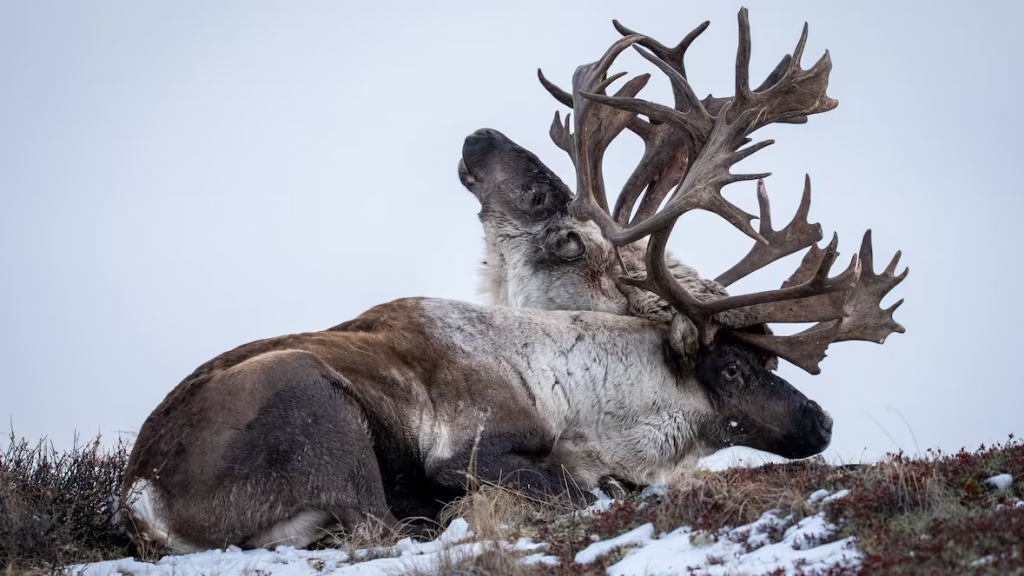
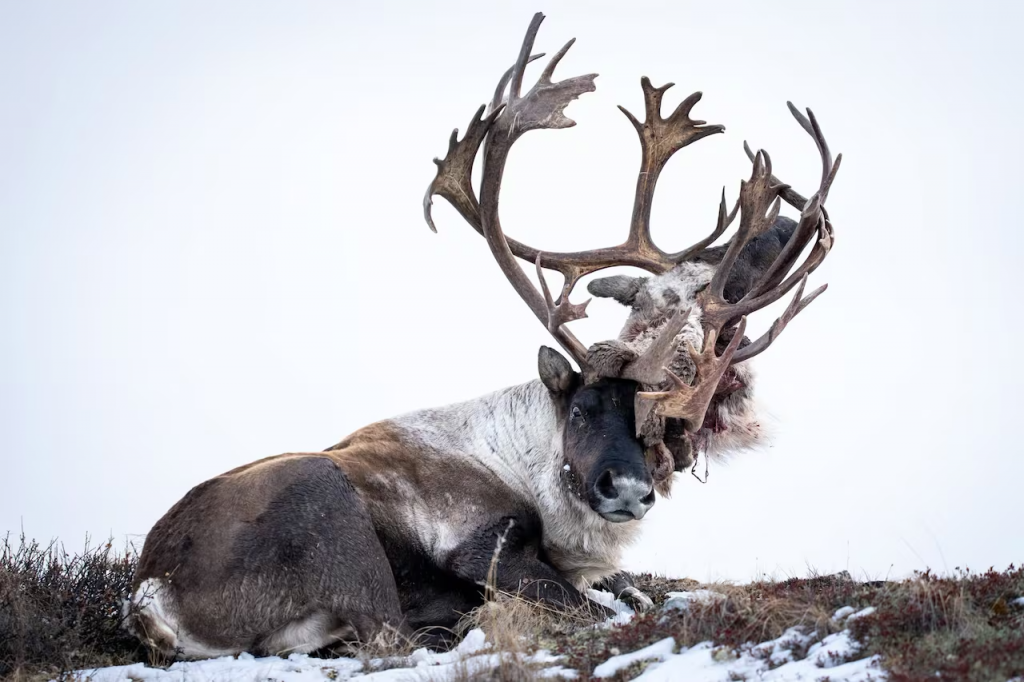
“I was just shocked to see … there’s two caribou with their antlers locked together, and one of them is dead,” he said.
He said he watched a bear nearby try to attack the caribou, but the surviving bull would scare the bear off.
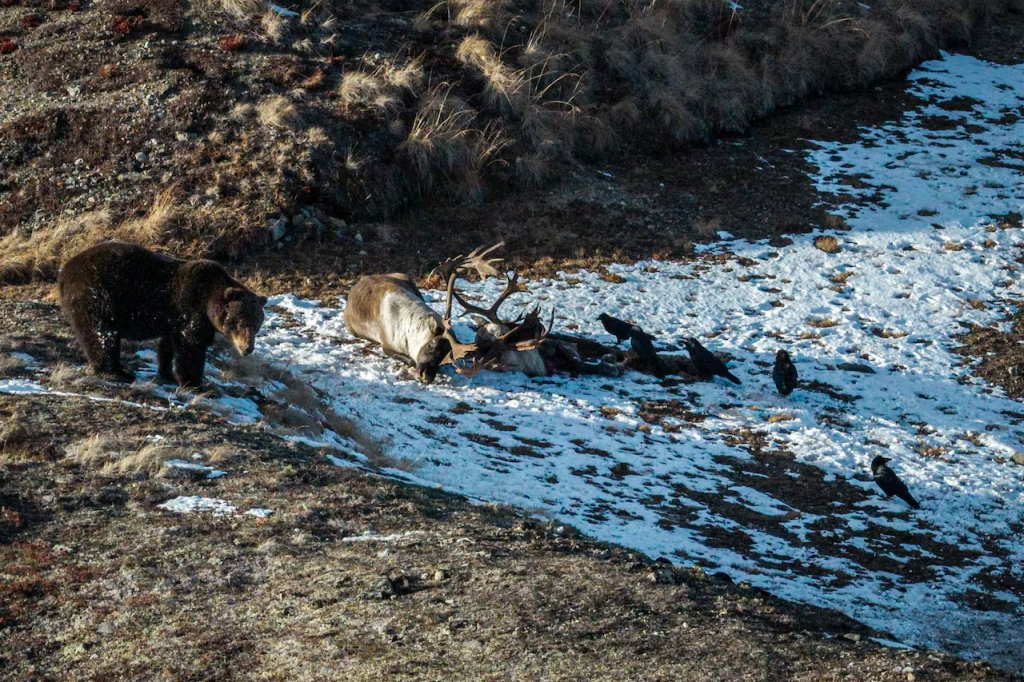
Mather said he watched this bull caribou for days.
“Over the four days that [dead] caribou disappeared,” Mather said.
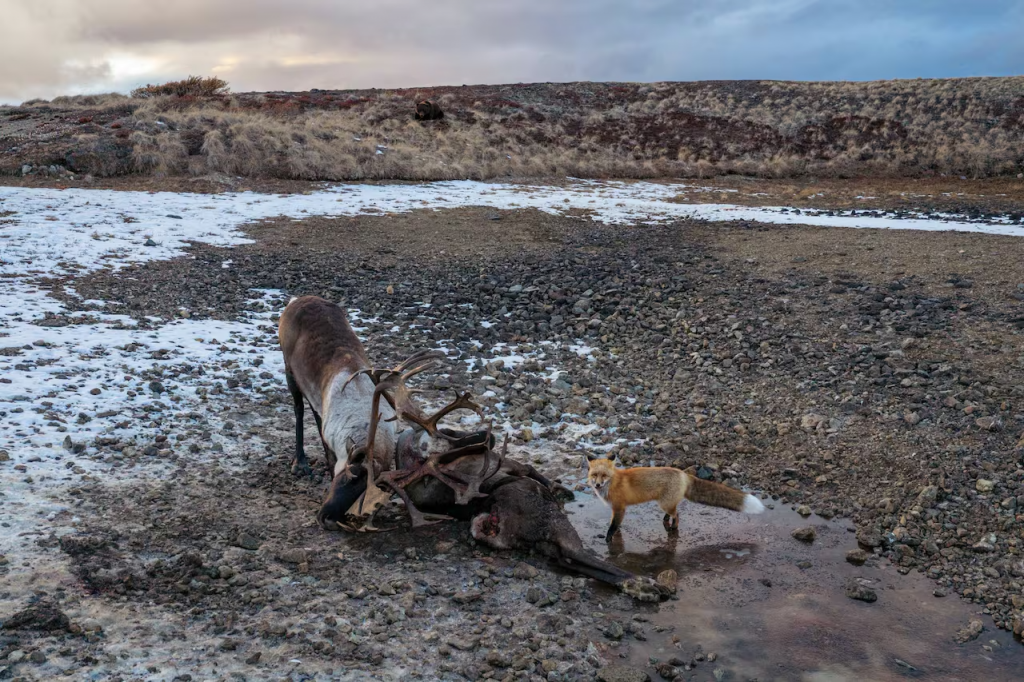
“There were foxes … ravens, golden eagles were eating it for four days.”
He said on the last day, a pack of wolves arrived at the scene. He believes they got much of the last of the carcass.
“In some ways, [they] kind of freed up this other caribou who could kind of walk away at the end, with two heads,” Mather said.
Locking antlers not unheard of
Mather said after the wolves arrived and feasted, the living caribou disappeared, and he couldn’t find it.
His work was to record the rut, mating season for caribou that often involve the males fighting one another, with the Southern Lakes Caribou Recovery Team and the Kwanlin Dün First Nation.
Lars Jessup, a biologist with the Southern Lakes Caribou Recovery Project, said this incident happened in a season where bull caribou are especially vulnerable.
“The rut season is the most dangerous time of year for bull caribou … they work really hard in the rut and the predators are usually around during the rut.”
He said bulls locking antlers is somewhat common, describing finding skulls and skeletons of caribou with locked antlers in the past.
“It’s probably more common that when that happens that they both die, not that one of them would live,” Jessup said, calling the living caribou “lucky.”
His time with the extra weight is also coming to an end, Jessup said.
“If he makes it another month or so, he’s likely to drop those antlers and lose the extra weight, and should be fine through winter,” Jessup said.
“By the time people usually see them down the mountains in and around Christmas time … the bulls are usually bald.”
A metaphor for the herd’s resiliency
This particular caribou is part of the Ibex herd, Jessup said, one of four caribou herds that make up the southern lakes caribou herds.
It is protected by the southern lakes caribou recovery project, which has continued for more than 30 years.
“The herds have done really well to recover over the last three decades, through all kinds of hard work and effort,” Jessup said.
However, he said there were concerns the natural ebb and flow of the caribou population was in an ebb, as they haven’t seen many calves in the last five years.
For Mather, the photographer, the footage he captured of that one caribou surviving, gives him some hope.
“For me, it’s like a metaphor for the whole herd, that he’s just resilient, just a really, really resilient caribou.”
Related stories from around the North:
Canada: Semi-annual international caribou conference held in Yellowknife, CBC News
Finland: Conservationists find more critically endangered Arctic fox cubs in Finnish Lapland, Yle News
Greenland: Researchers identify polar bear population that hunts off glacier ice, Eye on the Arctic
Norway: Could drones help prevent polar bear attacks on the Arctic archipelago of Svalbard?, The Independent Barents Observer
Russia: Polar bears take over abandoned research station in Russian Arctic, Reuters
United States: Alaska firefighters help rescue a moose trapped in a home, The Associated Press