Greenland tensions sharpen focus on Arctic infrastructure gaps in Canada
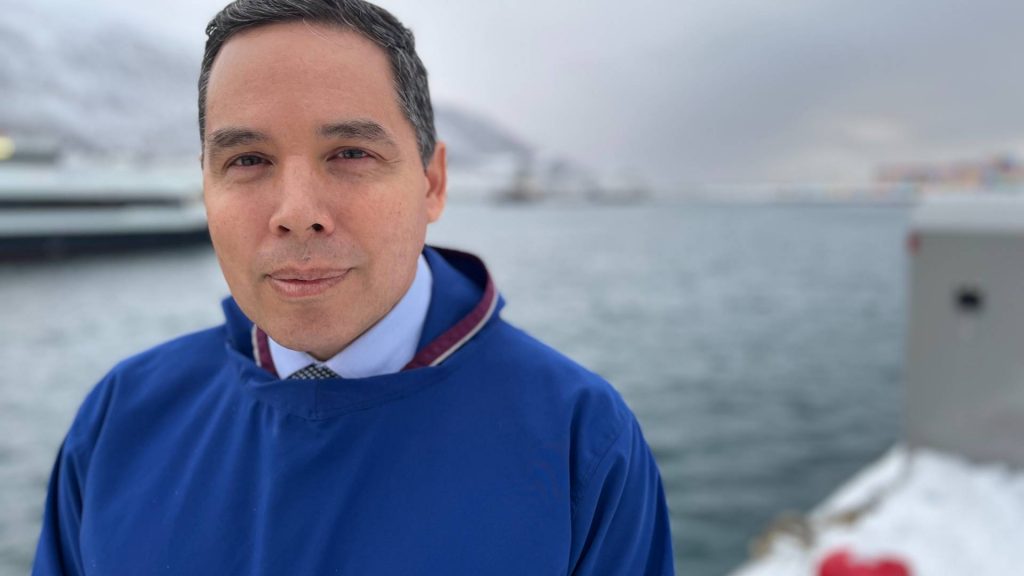
TROMSØ, Norway — Geopolitical tensions around Greenland and Russian activity in the North have refocused political attention on Arctic Canada, exposing long-standing infrastructure gaps that are undermining community well-being and national security, the president of Canada’s national Inuit organization said.
“Many times the rhetoric completely excludes Indigenous peoples and Inuit in our homeland,” Natan Obed, president of Inuit Tapiriit Kanatami, said in an interview Wednesday in Tromsø, Norway.
Rather than investing in stand-alone military installations, Obed said, Ottawa should invest in dual-use infrastructure such as airstrips and ports that would serve northern communities and also support Canada’s military when needed.
The gaps, he said, are stark.
Most roads in Canada’s 51 Inuit communities are unpaved and can only accommodate smaller aircraft. In addition, there’s only one deep-water port that serves the entire region, despite nearly all communities being coastal or located along major waterways.
“Many of our communities can’t allow for larger planes to land, because either the length of the runway or the condition of the runway,” Obed said. “Canada is at a strategic disadvantage just because it can’t land in all of the communities.”
Obed pointed to decades of Arctic defence spending that created self-contained military sites in places such as Inuvik and Iqaluit, that were built with little long-term planning even as they later became home to Inuit communities.
Obed welcomed federal discussions to expand and support the Canadian Rangers but said the investments don’t address conditions in the places where the Rangers live.
“Our communities have huge infrastructure deficits that preclude the Canadian military from mobilizing effectively in a time of crisis,” he said.
Inuit networks across the Arctic are a security asset: Obed
Obed contrasted Canada’s approach with Greenland, where Inuit political leaders take part directly alongside Denmark in international security and diplomatic discussions, citing Greenland’s Foreign Minister Vivian Motzfeldt joining Denmark’s foreign minister in Washington D.C. in January during talks aimed at easing tensions over Greenland.
“In Canada, we would never see Foreign Affairs Minister (Anita) Anand walk into a room in the United States with a democratically elected Indigenous leader as her equal,” he said. “That’s the type of thing that needs to change.”
Obed said that exclusion also overlooks one of the Inuit’s core contributions to Arctic sovereignty, the long-standing pan-Inuit ties across the Arctic despite national borders.
“We’re very fortunate that we have mobilized together across Greenland, Canada, Alaska, and the Chukotka region of Russia through the Inuit Circumpolar Council,” he said.
“We have been talking about the very same things that our nation states are talking about — about cooperation, about low-tension zones and about peace in the Arctic.”
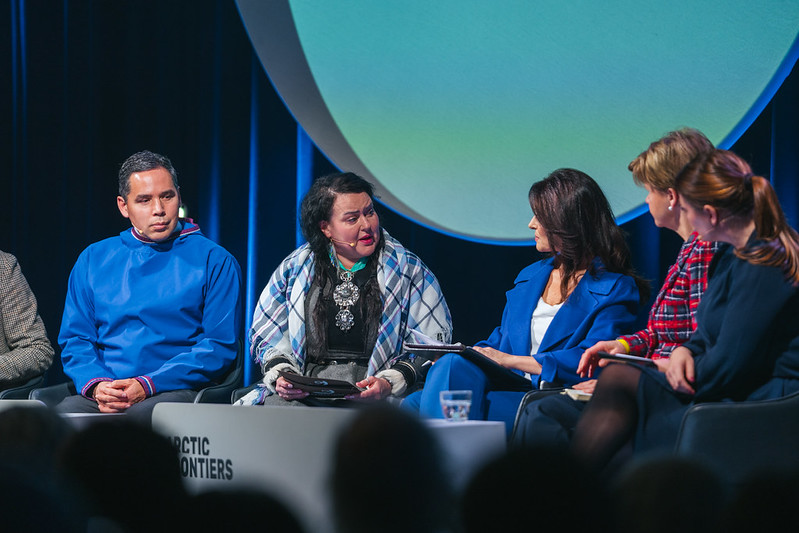
Obed’s comments followed his appearance at the Arctic Frontiers conference, where he took part in a panel on infrastructure investment amid shifting geopolitical pressures in the North.
Among the other speakers with him were Silje Karine Muotka, President of the Sámi Parliament in Norway, Baiba Braže, Minister of Foreign Affairs of Latvia and Norway’s Minister of Trade and Industry Cecilie Myrseth.
Muotka echoed Obed’s remarks on the importance of involving Indigenous peoples in Arctic security planning from the outset, noting Indigenous Arctic peoples’ deep knowledge of the land and how to move across it should be seen as an asset by national governments and not a barrier to overcome.
“Consultations too often happen late after key choices already are made, and this limits real influence and turns participation into a procedural formality rather than a substantive process,” Muotka said.
“We support infrastructure and the need of defence, but it cannot happen without us.”
Write to Eilís Quinn at eilis.quinn(at)cbc.ca
Related stories from around the North:
Canada: ‘Very significant’: GG Mary Simon on Canada’s Greenland consulate opening this week, Eye on the Arctic
Denmark: Denmark, Greenland leaders meet Merz, heading to Paris to shore up support, Reuters
Finland: Greenland clash left a mark on EU-US relations says Finnish PM, Yle News
Greenland: New Italy Arctic policy adds U.S. Greenland ambitions to growing Arctic competition narrative, Eye on the Arctic
Iceland: NATO chief to Arctic Allies: “We’re all frontline states now,” as Iceland’s role grows, Eye on the Arctic
Norway: “We want to be Europe’s most integrated region in terms of defence”, The Independent Barents Observer
Russia: Russia claims first-ever North Pole aerial refuelling, TASS reports, Reuters
Sweden: Swedish military intelligence on the great power rivalry over Greenland, Radio Sweden
United States: Rubio says technical talks with Denmark, Greenland officials over Arctic security have begun, The Associated Press