Gahcho Kué sees ‘encouraging’ diamond sale despite $120.6M net loss in second quarter
Analyst says there are positive signs for diamond pricing on the supply side, though demand still lags
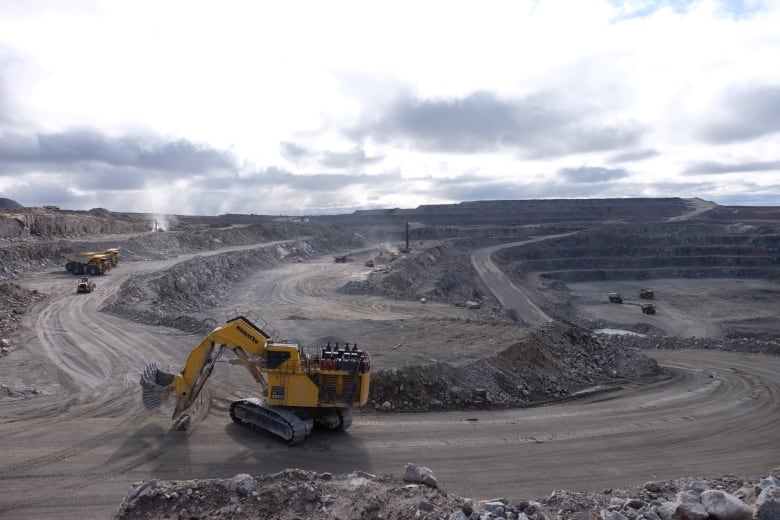
The Gahcho Kué diamond mine in the Northwest Territories posted a net loss of $120.6 million in the second quarter of 2026, according to a press release shared by its co-owner Mountain Province Diamonds on Thursday.
Mountain Province Diamonds has a 49 per cent stake in Gahcho Kué, with De Beers Canada owning the rest. The mine generated a $65.1 million net loss in the first quarter of 2026, and a net loss of about $280 million for all of 2025. It’s the last operating diamond mine in Canada.
Mountain Province Diamonds’ release for its second quarter results highlights that the figures come as the diamond market remains difficult for diamond producers, in part due to U.S. tariffs leading to geopolitical and economic uncertainty.
Despite the net loss, president and CEO Jonathan Comerford said in a press release that the mine’s most recent diamond sale showed an improvement in diamond prices, which Comerford attributed to a reduced global diamond supply.
“While it is too early to determine whether this represents the beginning of a sustained improvement in the market, the recent sale was encouraging,” he wrote.
Shrinking supply
Unfavourable market conditions have led to several diamond mines closing down or pausing operations globally, a prime example being the Ekati Mine in the N.W.T., which entered receivership last month after months held afloat by federal loans.
The shrinking supply might shape up to be a good thing for remaining mines like Gahcho Kué.
Paul Zimnisky, an independent diamond industry analyst, said by his count, at least 10 major diamond mines around the world have either closed down or suspended production.
“I think we hit a crescendo this year,” he said. “And because of that, we’re going to have the lowest production this year that we’ve had in probably 40-plus years.”
Zimnisky said over the last year, higher quality diamonds have been outperforming the market and going up in price, but recently, he has started seeing better performance in lower demand categories like smaller and lower quality diamonds.
“And I think that’s a direct result of so much supply coming offline,” he said.
However, some early positive signs on the supply side may not be enough to bring meaningful relief to producers, he said.
Need for higher demand
Zimnisky explained an increase in demand also needs to happen for sustainable recovery in diamond prices.
“So on one side of the equation, I would say we’re in good shape,” he said. “The other side is still kind of to be determined.”
One major factor that has historically played a role in demand has been De Beers’ ability to lead financing for diamond marketing, Zimnisky said.
With De Beers still up for sale, he said it’s unlikely to see a major marketing spend from the global diamond giant until the transaction concludes. He said marketing is especially important with luxury goods like diamonds, where emotions rather than need shape demand.
“I don’t perceive prices going down too much more from the current levels, but at the end of the day, I think we need a new demand driver to really take prices where we want them,” he said.
Related stories from around the North:
Canada: Yukon government offers incentives to switch to fossil fuels and rebates on electric bills, CBC News
Finland: Lapland among regions not in favour of wind power compensation for eastern Finland, Yle News
Greenland: Greenland rules out winter 2026-27 drilling for Nunap Qeqqa/Jameson Land oil project, Eye on the Arctic
Norway: Will the green transition be the new economic motor in the Arctic?, Eye on the Arctic
Russia: Fuel crisis grips Karelia in northern Russia, The Independent Barents Observr
Sweden: Electricity prices climb in Sweden as Russian gas pipeline goes offline, Radio Sweden
United States: Alaska’s Northwest Arctic Borough gets $2 million tribal energy grant, Alaska Public Media