After Imperial Oil turned off its last pump, Norman Wells, N.W.T., looks for what comes next
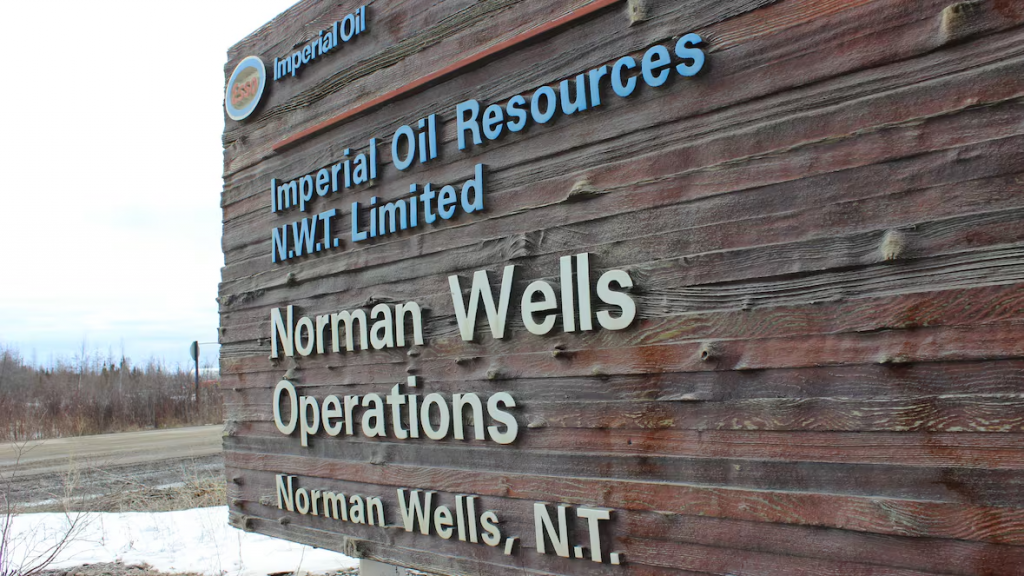
Imperial Oil has officially shut down operations in Norman Wells after more than a century
The community of Norman Wells, N.W.T., is facing some major changes after Imperial Oil officially shut down production in the town last Friday.
It was a moment that Mayor Frank Pope said was small but significant. Now, Pope and his community of about 700 people are looking at what comes next.
Imperial Oil has been operating in Norman Wells for more than a century. In January, the company said it would close its operations this summer, citing a decline in production at the site.
The shutdown has caused the town to shift the way it operates, Pope said. That included finding a new source of power.
The town’s power was tied to gas generation operated by Imperial Oil but it’s now switched to diesel power from the Northwest Territories Power Corporation.

Pope says it’s uncertain “how reliable the new [diesel] system is going to be,” and he’s concerned that there will be only one worker in the community who could fix any issues that arise.
If there is a major outage, crews would need to fly into the community, he said, adding that he hopes permanent trained staff will move to the community soon.
Imperial Oil’s departure has also triggered a reevaluation of the town’s budget.
According to a 2024 letter from Imperial Oil to the Sahtu Land and Water Board, the company paid around $6 million in local taxes to Norman Wells, which makes up around 70 per cent of the town’s budget.
“Are we going to have many cuts? Are there going to be service cuts? Are there going to be things that we don’t want to do, but we might have to do because of the lack of revenues?” Pope said.
He said negotiations with Imperial Oil to determine a new rate of taxation for the estimated 20-year remediation project will take place soon.
Pope is looking at more than tax rates — he’s also focused on jobs.
“I’m hoping they’ll still be able to hire as many local people here to work on that remediation as is possible,” he said.
It’s a sentiment that is shared by energy analyst and board advisor to the Sahtu Secretariat Incorporated (SSI), Doug Matthews.
Matthews, who is part of a closure working group which includes the government, Imperial Oil and the Town of Norman Wells, said discussions are ongoing about how to best train community members and ensure they benefit from the closure and restoration project.
“It’s their land after all,” Matthews said. “What better job than cleaning up the mess in your own land so it goes back to the way it was before?”
Matthews said the best way to approach the site’s remediation process is to use local skilled workers, and offer them additional training.
He said a local company in the Sahtu has already started working with Imperial Oil on the interim restoration, which is a good start.
“With some clever thinking and some hard work, a lot of those communities have been able to rebirth themselves,” Matthews said. “We could go from the producer of oil to the cleaner-up after the oil — and that introduces a whole new way of looking at the world.”
Related stories from around the North:
Canada: Yukon government offers incentives to switch to fossil fuels and rebates on electric bills, CBC News
Finland: Lapland among regions not in favour of wind power compensation for eastern Finland, Yle News
Norway: Will the green transition be the new economic motor in the Arctic?, Eye on the Arctic
Russia: Gasoline from Morocco remains stuck in Murmansk amid fuel crisis, The Independent Barents Observer
Sweden: Electricity prices climb in Sweden as Russian gas pipeline goes offline, Radio Sweden
United States: Alaska’s Northwest Arctic Borough gets $2 million tribal energy grant, Alaska Public Media