N.W.T. utilities board looking at how much renewable energy territory’s systems can handle
Territory wants to raise limit on how much independent producers can feed into the grid
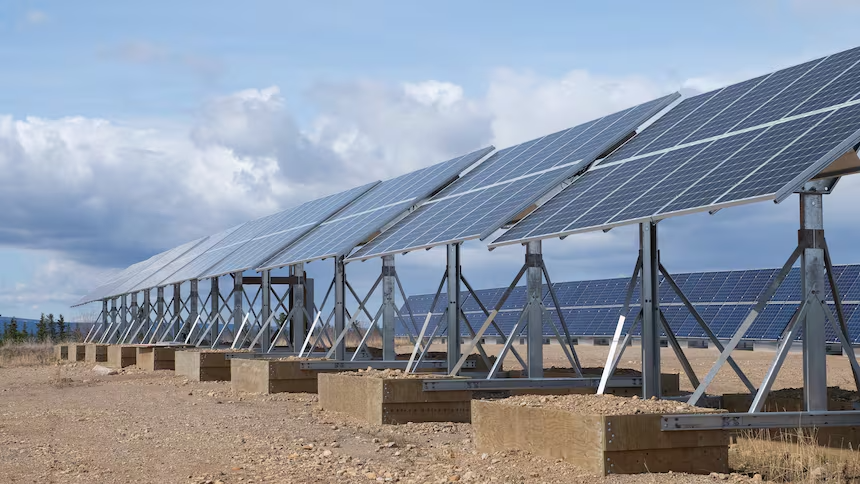
The N.W.T. government wants power companies to increase their use of renewable energy, but some experts say there are limits to what those companies can do right now because of costs and aging infrastructure.
Last year, the government told the territory’s Public Utilities Board to support renewable energy growth through a number of directives. One of those is to increase the limit on how much renewable power independent producers — such as community energy projects or individual homeowners — can feed into their local grid.
Right now, that limit is set at 20 per cent of the annual average load demand for each community and the territory wants that increased to 30 per cent.
According to the government, several communities have already reached the current cap, and raising the limit would allow for more renewable energy projects in the territory.
The N.W.T.’s two power companies, Naka Power and the N.W.T. Power Corporation (NTPC), last month responded in their own submissions to the utilities board, saying they will work toward enabling this increase, with clear definitions and set limits — while noting that anything over 30 per cent would require mitigations.
The reason for having a limit at all, according to the utilities, is that renewable energy causes diesel generators to run less efficiently and reliably, due to the variability of renewable energy sources. That means that the companies can lose money as more renewable energy is fed into the system, and it can also put the aging systems at risk.
Still, a 2021 engineering study commissioned by the territory analyzed the maximum possible limit on the amount of renewable energy generation the N.W.T.’s electricity systems could safely handle and put that number at 45 per cent. Anything more than that, it said, would require additional infrastructure such as battery storage systems and microgrid controllers.
“These systems face challenges when they’re trying to talk to and integrate with these very high-tech technologies of renewable energy generation,” said Lynne Couves, a director for the Pembina Institute’s renewables in remote communities program.
“These systems all across the North are old and they need to be modernized.”
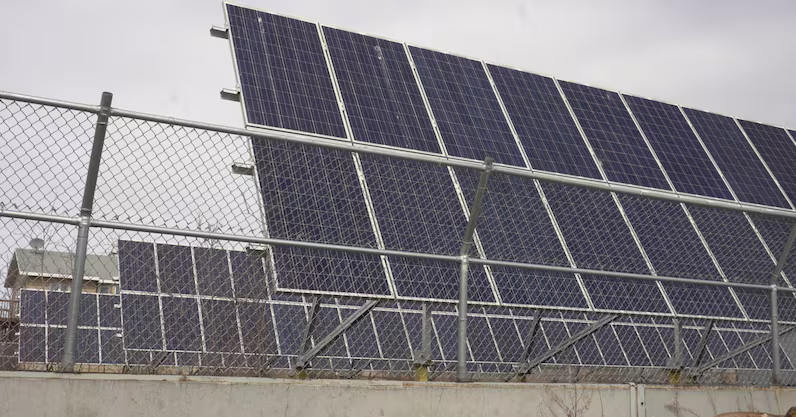
Renewable resource energy production, such as solar, is highly variable, said Couves. It rises and falls depending on weather, time of day and season, meaning it’s inconsistent how much electricity enters the system.
Couves said the limits set are “based on how comfortable the utilities are in managing the percentage of renewables.”
Couves said that a well-designed grid should begin by determining how much electricity is required, how that demand could change in order to determine the right mix of power generation.
“That could be solar, absolutely, especially with those long summer days,” Couves said. “It could also include wind.”
The community of Colville Lake integrated a battery and solar array project to run on a hybrid energy system in 2016, to the tune of $8 million with the help of federal funding. The Town of Inuvik installed a solar and battery project with the support of $5.5 million in federal funding.
Loss of revenue for utilities
There is also the question of cost for the utilities.
A 2021 consultant’s report done for the territorial government found that while independent renewable energy generation in communities can reduce greenhouse gases and allow some customers to save money on their bills, it can also result in financial losses for the utility companies.
That’s because when a household or community project generates their own electricity, the utilities sell less power. Despite reducing costs spent on fossil fuels like diesel, the utilities still have other fixed costs associated with operations and maintaining infrastructure and those don’t change even as more renewable power is fed into the grid.
The consultant’s report estimated the net revenue loss to utility companies from independent (non-utility) renewable generation at approximately $493,000 in 2019. It said that could reach $1.8 million to $2.7 million within a decade “if the existing 20 per cent capacity limits are maintained.”
Battery storage could ‘stabilize the whole system’
Dennis Bevington is president of Stand Alone Energy Systems Ltd., an energy business in Fort Smith, N.W.T., and he’s an intervenor in the Public Utilities Board proceeding. He wants to see the territory reduce energy costs, increase reliability and decarbonize the system.
“I don’t necessarily say that everybody should put solar panels on their house property. I think that we need to see larger solar arrays in communities,” he said.
Bevington said the key to supporting more renewable energy in the territory is storage.
“As soon as you put batteries into the system, you stabilize the whole system,” he said. “Batteries are [an] integral part of any modern energy system and especially in these micro grids.”
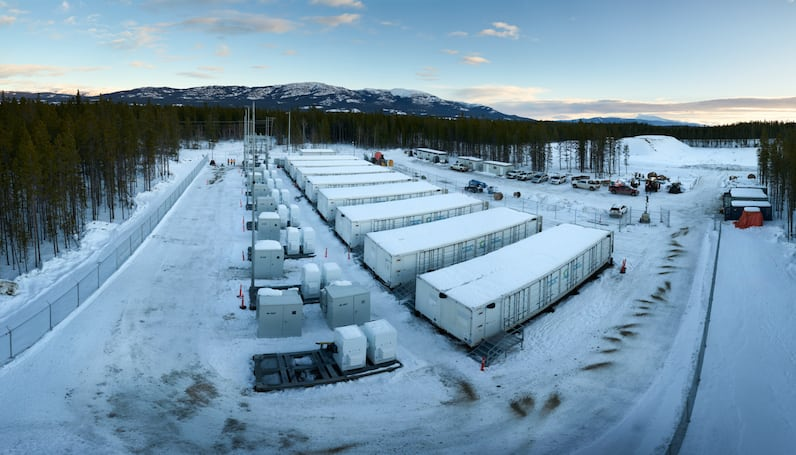
Couves agrees that batteries are an important part of modernizing northern grids, but she said it’s not a simple fix.
“Batteries are great because they can reduce those swings that the grid feels,” she said. “But batteries aren’t free.”
Bevington said the cost of new technology should be weighed against what the territory already spends on existing electricity systems.
“Everything in our systems is expensive. But what is the return?” Bevington said. “If something costs you a certain amount of money, but it can save you over years much more money, then it’s not expensive. It’s necessary.”
The Public Utilities Board proceeding is expected to continue through 2027. Registered stakeholders and intervenors will have the opportunity to submit their responses to the proposed changes next March, and a public hearing is scheduled for June.
Related stories from around the North:
Canada: Electricity bills expected to go up again as Yukoners await new rebate details, CBC News
Finland: Electricity to get more expensive in the north due to new Sweden-Finland powerline, Radio Sweden
Greenland: Report confirms heat records in Europe and Arctic, but war-fuelled energy crisis boosts renewables and embattled climate, Ice-Blog
Sweden: Foreign power may strike Nordics’ electricity grid ‘in the near future’, Sweden’s TV4 reports, Yle News