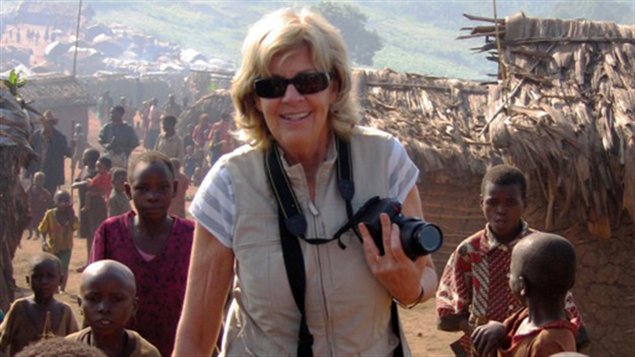
From the frontlines of Afghanistan, Bosnia, Africa and Asia, Sally Armstrong has reported on some of the worst abuses against women for 25 years. Now the award-winning human rights activist and reporter has written a book showing things are improving dramatically for women around the world.
When headlines scream about the rape and murder of a young women in India or the shooting of young Pakistani Malala Yousafzai because she yearned to go to school it’s hard to believe things are getting better for women. But Sally Armstrong points out that in the past these stories were not covered because they were not deemed important. That they are told and echo around the world is a measure of change.
Armstrong got into the business of reporting horrors against women when she learned about Serbian rape camps. She wrote about them but no one would publish the story. At that point she realized she should be telling stories and making the world notice them. The work has been difficult but Armstrong is buoyed by new hope.
“Women are talking”
“Women are talking,” said Armstrong. “They’re asking questions they never dared to ask before such as ‘Show me where it’s written in the Qur’an that my daughter can’t go to school because that’s not in the Qur’an. Nor is there any word in the Qur’an about you can’t go to work.’ So the women began to realize they were being used by political opportunists and they decided they wanted to make a change and that kind of change spread all over the world.”
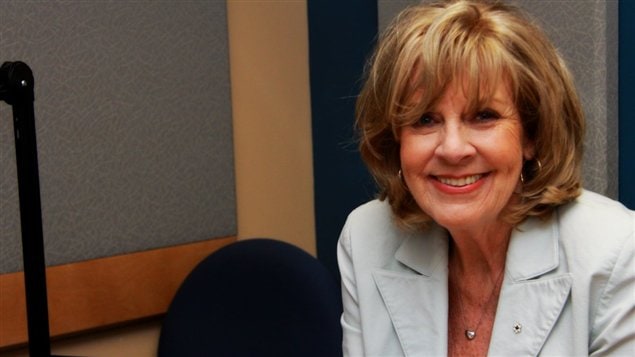
The HIV epidemic made African women realize they had to change things or they would all die. They had to empower themselves to be able to change the sexual practices that were harming them.
“Can’t stop it now”
The Arab Spring encouraged many women to become activists and the internet has permitted quick transmission of the news of women’s ascendancy. “Women the world over were talking to each other,” said Armstrong. “The women wearing hijab found out that despite what the fundamentalists told them women jeans were not all whores. And women wearing jeans found out that women wearing hijab were not all subjugated and supressed and having no opinion…I think that the very worst day in the lives of misogynists and extremists was the day those women started talking to each other because they’re toast now. These women are finding out from each other what the facts are and this bus of change, you can’t stop it now.”
Important figures like American Economist Jeffrey Sachs have shown how empowering women and girls improves a village’s economy and leaders are coming to understand that it is in everyone’s interest to educate and empower them.
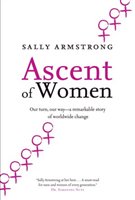
The Ascent of Women details the “perilous journey” that has brought about change for the world’s women. “I didn’t think I’d get to see this change and now I am not only seeing it, it’s happening so fast…” said Armstrong. “This can’t go backwards. We know change like this picks up speed as it moves.”
Reporter and human rights activist Sally Armstrong described women’s progress to RCI’s Lynn Desjardins.
Listen





For reasons beyond our control, and for an undetermined period of time, our comment section is now closed. However, our social networks remain open to your contributions.