N.W.T. gov’t hopes for ‘rebound’ in spring water levels this year on Mackenzie River
By Yumna Iftikhar
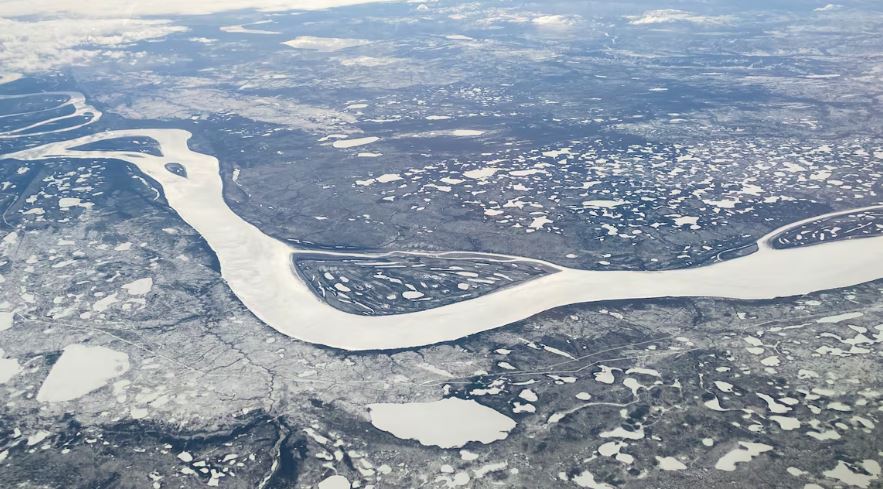
Heavy winter snowpack to the south could help bring the Mackenzie River closer to normal this summer after years of low water, according to an N.W.T. government hydrologist.
The territory has seen lower water levels in many regions in recent years along with warmer and drier summer weather. On the Mackenzie River, that’s disrupted the barge season and the transportation of goods to communities.
According to the territory’s 2026 spring water outlook, released on Thursday, water levels across the territory are currently lower than normal, with some exceptions in mid-size and smaller rivers.
Anna Coles, a senior hydrologist with the N.W.T. government, says that could change as snow melts this spring. She said higher-than-average snowpack in northern Alberta, northern British Columbia and the southeastern Yukon could drive spring flows back toward normal levels.
“We are encouraged by that, that we will see some rebound in the spring flows and potentially approaching near-normal spring flows this spring,” she said.
Coles cautions that water levels after spring and through the summer will depend on rainfall and temperatures across the basin and local conditions in individual watersheds.
She added that her team maintains contact with the territory’s Marine Transportation Services, which is responsible for barging essential goods to remote communities.
“They look at these data just as we do, to try and make those judgments and inform their planning,” she said.
Flood risks
Coles says that while average water flow generally means average flood risks, there are other factors that can either increase or mitigate risks for communities.
“There’s always the possibility that there is an unusual spring weather condition, such as heavy rainfall, which would increase spring flows,” she said.
The spring water outlook notes the risk of an ice jam flood is highest during spring break-up.
“It is difficult to predict in advance how river ice break-up will occur, and if/where and for how long ice jams will form, because these factors are highly dependent on spring weather conditions,” the report reads.
Former MLA and local business owner Jane Groenewegen lives on the banks of the Hay River and she remembers both the 2022 flooding in Hay River and the drought conditions the year after.
“We went from one extreme to the other,” she said.
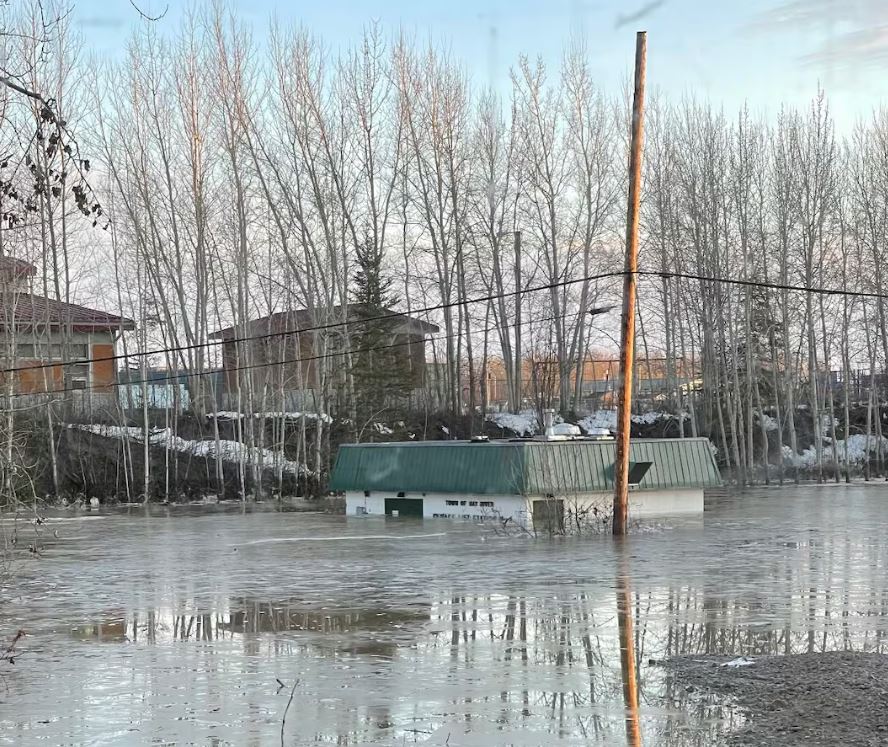
According to the spring water outlook, the Hay River basin will likely see spring flows that are “approximately normal” this year, though that could change depending on the weather. Ice jams are another factor that could cause “out of bank flooding, regardless of flow,” the report says.
While the break-up season can be exciting for Hay River, Groenewegen says residents are still affected by the 2022 flood which damaged infrastructure and prompted the evacuation of the community.
“I don’t really think that psychologically Hay River is over the flood of ’22 yet. And so I really hope that we don’t get any repeat disasters like that.”
Related stories from around the North:
Canada: Yukon officials concerned about possible spring flooding in Old Crow and Klondike Valley, CBC News
Iceland: Iceland ramps up flood, avalanche defence projects after major budget boost, Eye on the Arctic
United States: Bursting ice dam in Alaska highlights risks of glacial flooding around the globe, The Associated Press
Greenland: Alarming, above-average ice loss in Greenland due to rising temperatures, Eye on the Arctic
Norway: Polar heat record. July average above 10°C, The Independent Barents Observer