
Feds to clean up old Arctic weather station contaminated by asbestos, lead
Experts hope its contamination is a warning for future development
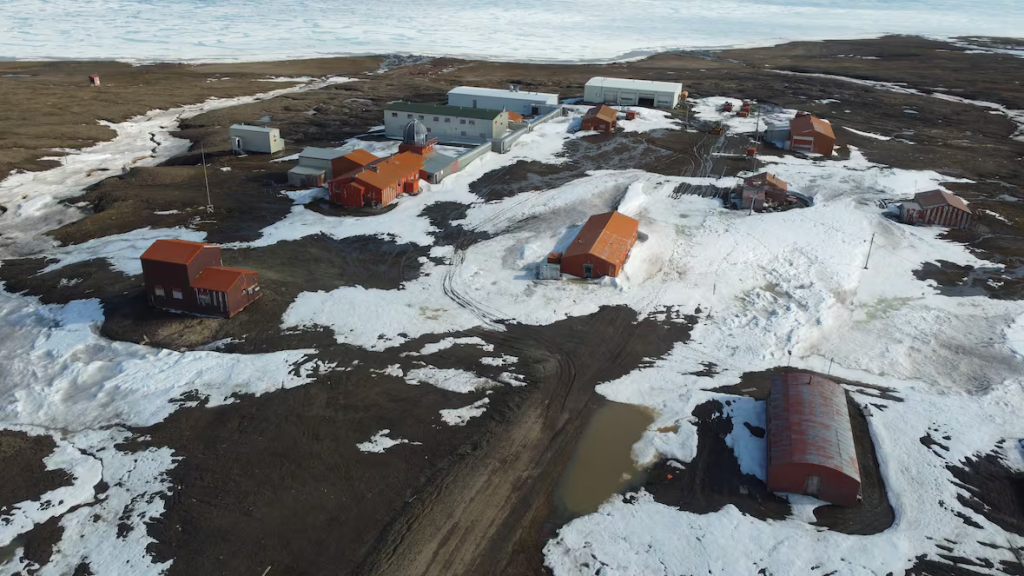
The site of Isachsen is a snapshot in time. It still has leather lounge chairs, an old Chrysler Dodge truck and an issue of TIME magazine with the U.S. President Gerald Ford on the cover.
After nearly 50 years of decay, the abandoned High Arctic weather station is set to be cleaned up, but some experts say the contaminated site stands as a caution for future Arctic developments.
Ken Coates, a professor emeritus from the University of Saskatchewan and Arctic historian, says Isachsen embodies Canada’s troubled history of Arctic development.
The site of Isachsen is a snapshot in time. It still has leather lounge chairs, an old Chrysler Dodge truck and an issue of TIME magazine with the U.S. President Gerald Ford on the cover.
After nearly 50 years of decay, the abandoned High Arctic weather station is set to be cleaned up, but some experts say the contaminated site stands as a caution for future Arctic developments.
Ken Coates, a professor emeritus from the University of Saskatchewan and Arctic historian, says Isachsen embodies Canada’s troubled history of Arctic development.
“We weren’t very careful at all,” Coates said. “We had left garbage dumps behind. We weren’t very careful with chemicals back then, all sorts of chemicals. And it had pretty devastating effects we only started thinking about over time.”

Isachsen station was part of the weather observation program created by Canada and the U.S. during the Cold War. The station is about 450 kilometres northeast of Resolute Bay, Nunavut, and 1,300 kilometres from the North Pole. It operated for two decades and shut down in 1978 as weather reporting automated and the station became obsolete.
The site is filled with hazardous chemicals including asbestos, lead, mercury and mould, and represents an “environmental risk,” according to documents the Department of Environment and Climate Change Canada (ECCC) submitted to the Nunavut Impact Review Board (NIRB).
And as the Canadian government is once again looking North for mining and defence, Coates worries Isachsen’s story might repeat in the future.
“We are going to do a lot better than we’ve ever done before,” Coates said. “But I worry that when you make decisions in haste, you’ll pay the consequences.”
The federal government is now making plans to start its remediation of the former Cold War era station. It’s set to begin in summer 2027 and to continue until 2030.
Contaminants can travel through water
Even though Isachsen is far from humans, contaminated sites specialist Catherine Mulligan said the contaminants can travel hundreds of kilometres through water.
“So basically water is kind of the conduit for contaminants,” Mulligan, professor of environmental engineering at Concordia University, said.
“So once things get into water, it could, you know, it could travel quite some distance.”
Isachsen is one of 800 contaminated sites in Nunavut with old equipment, two landfills and thousands of barrels with over 76,000 liters of waste fuel, according to ECCC submissions to NIRB. Many of those have on-going remediation activities.
Since 2012, the government has spent just under $9 million to assess and remediate the site. Now it’s planning what it calls a “full-scale remediation.”
“Planned remediation activities are expected to include the abatement and off-site disposal of hazardous materials, demolition of deteriorated structures, and removal of other site hazards,” spokesperson for ECCC Samantha Bayard said in an email.
Related stories from around the North:
Canada: Eagle gold mine cleanup costs more than $11M a month, receiver says, CBC News
Norway: 25th anniversary of Norway’s financing of nuclear-dump cleanup in Arctic Russia, The Independent Barents Observer
United States: Alaska marine debris experts call for tighter regulation and more cleanup funding, Alaska Public Media