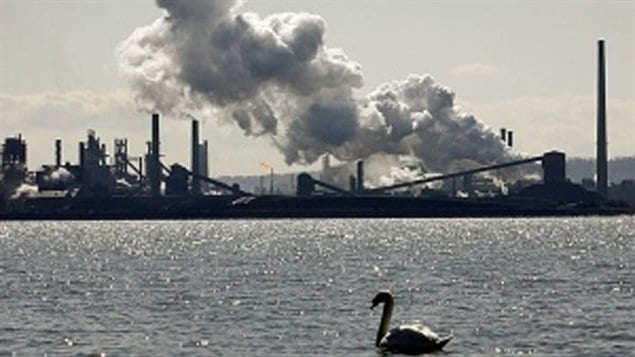
Canada today signed the international agreement known as the Minamata Convention on mercury pollution.
This is a global effort to reduce mercury emissions and releases into the environment.
While Canada has reduced its own level of mercury emmissions by some 90% in the past few decades, the fact is that 95% of mercury from human activity deposited in the environment in Canada comes from foreign sources.
Fish and marine life, including waterfowl often accumulate mercury, which is then consumed by humans. This is of special concern to indigenous groups in the Arctic where fish and species like seals, constitute an important portion of their diet.
The Convention addresses all aspects of the life-cycle of mercury, including providing controls and reductions across a range of products, processes and industries where mercury is used, released or emitted.
However, the pace of mercury reductions globally will depend on a number of factors, including which countries ratify the treaty, how many ratify and what actions the Parties to the treaty decide to take.
It takes a minimum of 50 countries to sign a treaty before it comes into force.
The Minimata Convention is named after the Japanese city of Minimata where so-called “minimata disease” was detected in 1956.
For decades, a local chemical company released wastewater containing methylmercury waste into the sea.
The toxic chemical accumulated in fish and shellfish eaten by residents in the nearby city.
In spite of the of the obvious severe and often fatal affects, the Chisso corporation only ceased its pollution in 1968. As of 2001, over 2,200 victims had been identified, more than half of whom had died from the toxic methylmercury. As of 2004 the company had paid the equivalent of $86 million in compensation and ordered to clean up the contamination.





For reasons beyond our control, and for an undetermined period of time, our comment section is now closed. However, our social networks remain open to your contributions.