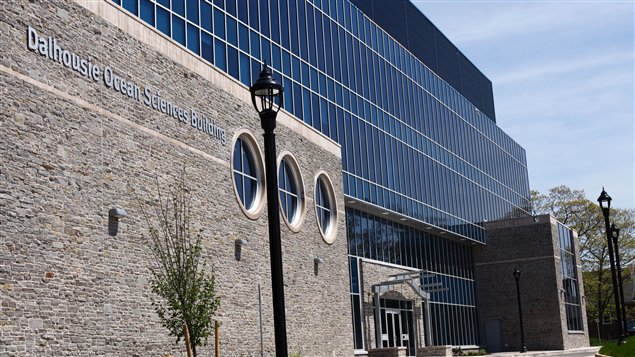
It was a big day for ocean research this past Wednesday, June 5th. A huge new and very unique Oceans Sciences research building was dedicated at Dalhousie University in Halifax, Nova Scotia.
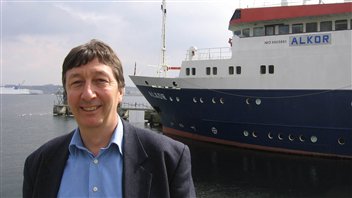
Doug Wallace, is the Canada Excellence Research Chair in Oceans Science and Technology, and a professor of chemical oceanography at Dalhousie.
The state-of-the-art research building is designed to bring together a number of ocean research organizations, currently housed in a variety of buildings in the city and at the university.
In addition to the research group headed by Dr Wallace, the new facility will bring in the Halifax Marine Research Institute (HMRI), the global consortium Ocean Tracking Network (OTN), and the
Marine Environmental Observation Prediction and Response NCE -Network (MEOPAR), all under one roof.
As Dr Wallace says, previously, “there were interactions, but it was scattered and difficult for people to exchange ideas”. He adds, “The new building will house some large projects allowing us to work collectively in one place, with state of the art equipment and bring people more easily together to exchange and develop new ideas”.
Professor Wallace also says the facility will house integrated shipping container labs. While labs in shipping containers is not new, in this case they are integral to the building and rather than having to rebuild equipment in containers for outside research, and possibly recalibrate delicate instruments, when outside research is necessary, the equipment will simply be secured, the container doors closed and the fully functional lab loaded aboard research ships or vehicles ready for work.
While the building was dedicated this week, work will proceed on finishing interior needs and installing the various organizations throughout the summer.
It is fully expected that when operational, the new Oceans Sciences Building, will be a-if not the-premier world-class facility conducting important and innovative research and attracting interested scientists from around the world to visit and carry out their own research projects.






For reasons beyond our control, and for an undetermined period of time, our comment section is now closed. However, our social networks remain open to your contributions.