
The well-prepared ships left England in 1845 in search of the fabled Northwest Passage through the Arctic, to the Orient.
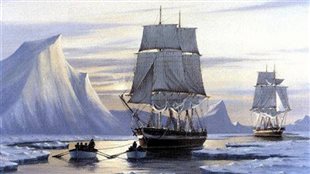
In England two years later it was determined something went wrong, and rescue missions sailed out in search of the expedition.
Although traces were found, the majority of the crew, Franklin himself, nor the ships were ever found, leading to one of the world’s greatest maritime mysteries.
Dozens of books, documentary films, and songs have been written
Unexpected weather and luck
Canada has spent vast sums in the past few summers searching likely spots in the Arctic for the two ships
Today they met with success. And it was due to a combination of luck and technology, and some unexpected weather and ice conditions.
The luck was that the massive search effort currently underway in a suspected area was unexpectedly blocked by ice, sending researchers off in a different area.
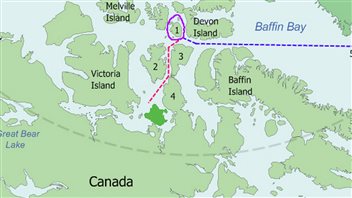
This was one where Inuit oral history had long suggested a ship had been trapped in ice. However, throughout the decades and century, not much credence had been given to Inuit “legend”
The scientists, temporarily forced away from the main search area, landed a helicopter on a small island near where Inuit legend said a ship had been seen. Then the pilot, wandering the beach while scientists searched an old inuit campsite, spotted a heavy piece of iron.
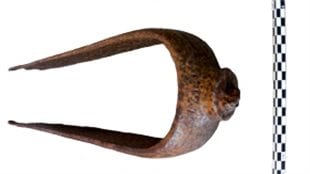
Inuit had often carted away any iron pieces they came across finding things like nails extremely useful, but this large piece about 10kg, was soon determined to be a part of a davit used to lower a ships boat.
The scientists determined that being that heavy it couldn’t have been moved that far by water, ice, and probabley wasn’t useful to the Inuit. They felt the ship must be nearby.
Using sophisticated technology they searched the water nearby and finally located one of the two ships. A remote operated vehicle ( ROV) was sent below to capture images of the ship which appears to be in a relatively well preserved state.
The discovery is of such significance to Canada, and to Britain, and in the history of exploration, that Canada’s Prime Minister Stephen Harper, was the one to make the announcement of the find at a news conference today.
The exact location is being kept secret for now to avoid any ship traffic and potential damage to the ship or loss of historic artefacts.






For reasons beyond our control, and for an undetermined period of time, our comment section is now closed. However, our social networks remain open to your contributions.