Fresh potable water is becoming increasingly critical around the world.
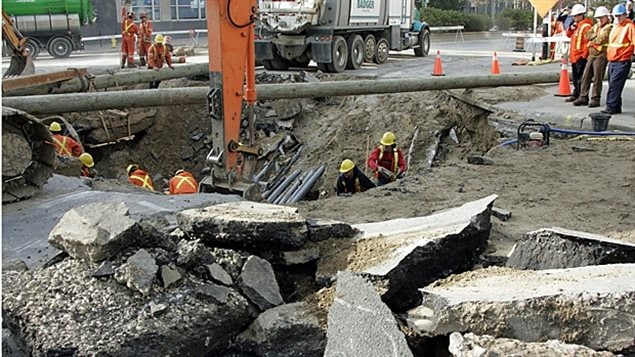
In Canada, as is the case in most major cities, municipal water supply systems are buried in pipes underground and are out of sight.
Many of these systems are ageing and the pipes are leaking such that vast quantities of treated potable water is being lost.
A Canadian professor has a relatively simple low-cost way to detect leaks early before they become a problem. He suggests using “sound loggers”.
Tarek Zayed, (Ph.D., P.E., P.Eng ) is a professor in the Department of Building, Civil and Environmental Engineering at Concordia University in Montreal
Listen
Many city systems now “lose” as much as 30 per cent or more of their treated potable water supply. This represents a vast waste in terms of water treatment cost, but also in potential damage to infrastructure with even greater costs. As well, contaminants can enter the water system through holes in the pipes, creating the potential for serious health risks.
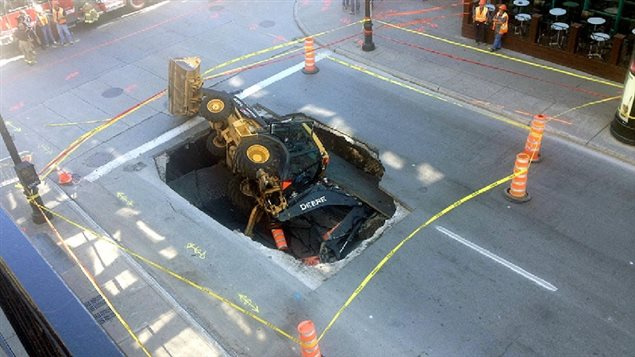
Often a leak isn’t located until it does cause serious damage.
A 2009 study said in the province of Ontario leaky pipes meant some 25 per cent of its drinking water — enough to fill 131,000 Olympic-sized swimming pools was leaking out every year, and in dollar terms was equal to a loss of $700 million annually.
Professor Zayed said now, across Canada if leaky systems were could be repaired, the savings would be in the billions of dollars.
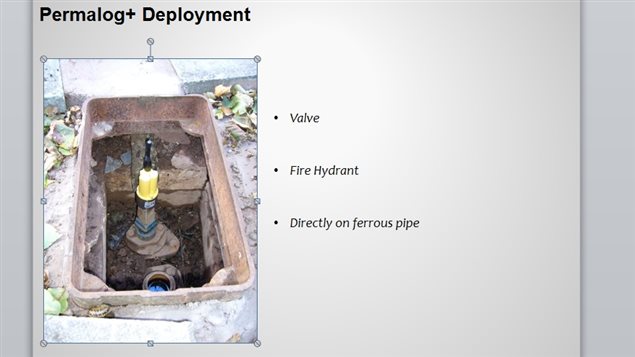
Professor Zayed’s solution is to attach “noise loggers” to various easily accessible areas in municipal systems such as the shut-off (isolation) valves. The noise from the pipes is analyzed and certain types of continous sound anaylzed by computer would indicate a leak. The system of sensors would accurately situate the leak meaning less time and money spend digging to find it.
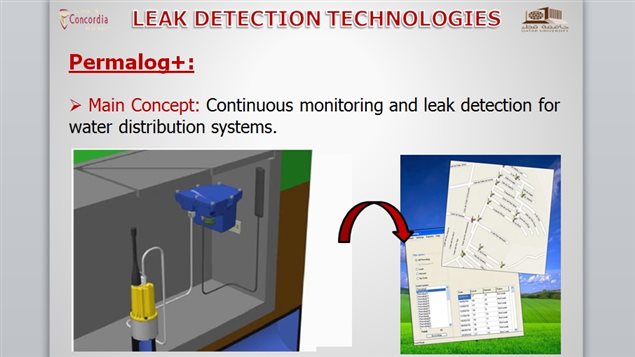
“This approach can reduce the duration of a leak, as well as the cost and time involved in locating the site in need of repair,” says Zayed, who co-wrote the article with post-doctoral fellow Mohammed S. El-Abbassy, recent graduate Fadi Mosleh and Ahmed Senouci from the University of Houston and Qatar University.
The concept was tested in Doha, Qatar, where that region’s water supply suffers a 30 to 35 per cent leakage rate.
Over a period of two weeks the team installed loggers on the Qatar University main water network. Collecting data from 140 different points, they then analyzed the results comparing sound level and spread. A consistent anomaly suggested a leak.
Running simulations on mathematical models, they found a determined a locations of the leak. Qatar University later reported that investigations determined the team’s estimation of the leak locations were 99.5 per cent accurate, i.e. the leak was found within less than one metre of the predicted location.
Professor Zayed says he is also looking into the use of ‘micro-electronic sensors’ but the results of trials are not complete yet.






For reasons beyond our control, and for an undetermined period of time, our comment section is now closed. However, our social networks remain open to your contributions.