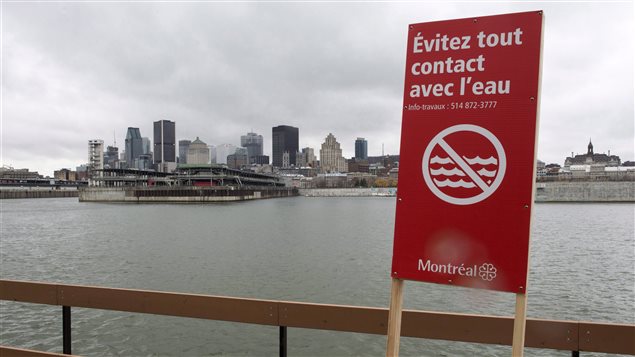
Canadian cities and towns dumped more than 205 billion litres of raw sewage and untreated waste water into the country’s rivers and oceans last year, CBC News has learned.
The amount of untreated waste water, which includes raw sewage and rain and snow runoff, that flowed into Canadian rivers and oceans last year would fill 82,255 Olympic-size swimming pools — an increase of 1.9 per cent over 2014, the CBC investigation has found.
“These numbers are still really alarming,” Elaine MacDonald, an environmental engineer with Ecojustice, told CBC News. “There’s obviously a lot of untreated waste water that’s still entering the environment.”
Coast to coast pollution
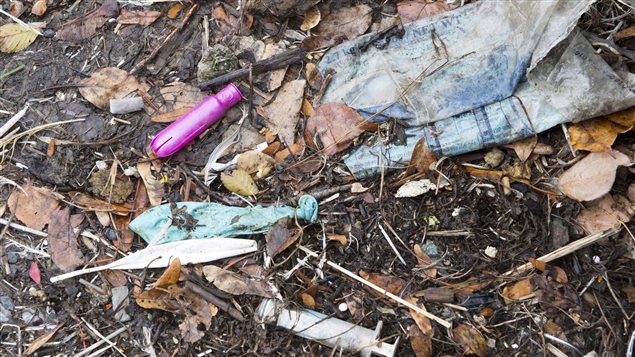
The discharges or raw sewage and untreated water pollute the environment from coast to coast, with toilet paper washing up on the Atlantic coast near small towns in Newfoundland and Labrador, and divers reporting sick kelp and polluted scallops near sewage discharge pipes on the Pacific coast in Victoria, British Columbia.
The volume of raw sewage and untreated water was supposed to drop as cities and towns moved to comply with federal regulations introduced in 2012 by the Conservative government of then Prime Minister Stephen Harper to try to solve the problem.
But figures obtained from Environment Canada show that after a small improvement between 2013 and 2014, the amount of untreated waste water actually increased last year.
Climate change could make it worse
Green Party Leader Elizabeth May expects the problem will get worse as climate change brings more abundant rainfalls, overwhelming municipal water treatment systems.
“Our aging waste water infrastructure was designed for a different climate, and for many municipalities across Canada, when you have a deluge rain event your sewage treatment bypasses the sewage plant and goes right downstream,” May told CBC News.
The Liberal government has earmarked $2 billion for about 500 municipal waste water upgrade projects.
But the Federation of Canadian Municipalities (FCM) estimates that cities and towns across the country need about $18 billion to comply with the federal standards.
Based on reporting by Elizabeth Thompson, CBC News






For reasons beyond our control, and for an undetermined period of time, our comment section is now closed. However, our social networks remain open to your contributions.