The fears in both World Wars were always there; you never knew where a spy or saboteur could be lurking, even in Canada which was far distant from the wars on other continents.
On this date in 1915, there was a loud and potentially deadly reminder.
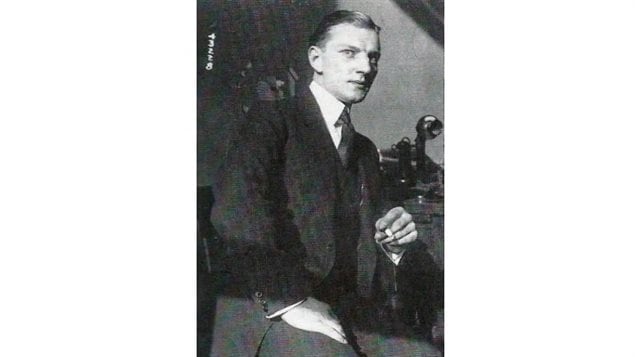
The declaration of war in 1914 found German reserve army Leutnant Werner Horn managing a coffee plantation in Guatemala. (some sources have him as Captain)
Wanting to serve his homeland he sailed for New York and from there he would sail to Germany. The British blockade prevented that, but he later came into contact with the German military attache to the US, Franz Von Papen.
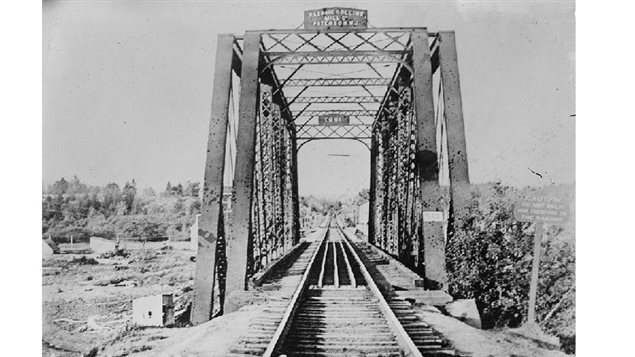
Although the US was neutral at the time, much war material was passing along the Canadian Pacific railway line which briefly entered Maine, and then back into Canada across the Vanceboro bridge.
In one of his many sabotage efforts, Von Papen paid Horn a substantial amount to bomb the bridge and thereby disrupt to flow of war goods to east coast ports and then to the war in Europe.
Horn arrives in the small town, but the stranger arouses suspicion as he continually watches the bridge. He is questioned briefly by local authorities but finding nothing obviously wrong, he is left alone.
He had also been connected with a group planning to bomb several bridges, but missed the meeting at which the bombings were called off due the bitter cold weather.
Horn then checks out telling the hotel owner he is leaving. He waits in the woods until late at night to ensure no trains are coming to avoid any deaths. In the bitter cold, he skulks across the bridge where he places about 30 kg of explosives against a girder, then sneaks back across to the US side, but by now he is almost frostbitten.
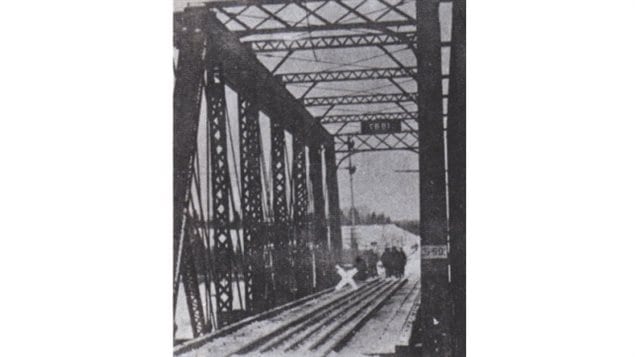
The bomb goes off at 1:10 AM on February 2, shattering a few windows in buildings on both sides of the border.
Fortunately, Horn was not a demolition expert and the bomb merely slightly bent a girder and scorched some others and within a couple of days, the bridge was back in service.
Nearly frozen he goes back to the hotel where the bomb has awakened the owner (and residents on both sides of the border) who finds him trying to warm up downstairs. He lets him back into a room, but has easily figured out what has happened and police are called in the morning.
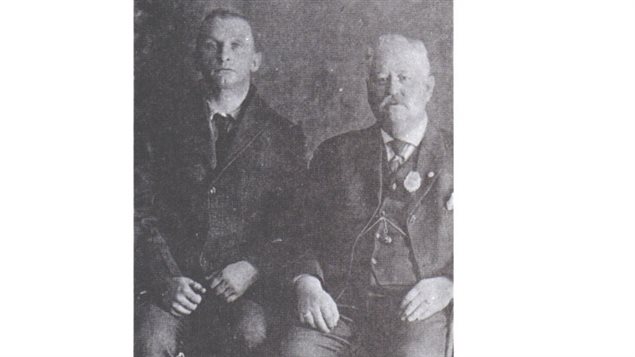
Horn meanwhile has put on his German uniform to avoid being arrested and potentially shot as a spy.
Taken into custody, he could only be charged with a relatively minor crimes as the bomb exploded on the Canadian side.
After 18 months in a US prison he is extradited to Canada and given a ten year sentence. However, he was released to Germany in 1921, initially listed as being insanc, but actually suffering from advanced syphilis.
The attempted sabotage did nothing to hurt the war effort but did awaken the Americans to the fact that Germany was sending spies and organizing sabotage efforts. It was another step which helped change the isolationist sentiment and bring the US into the war in 1917.
Additional information –sources






For reasons beyond our control, and for an undetermined period of time, our comment section is now closed. However, our social networks remain open to your contributions.